The method
The Integral Movement Method for Hypermobility
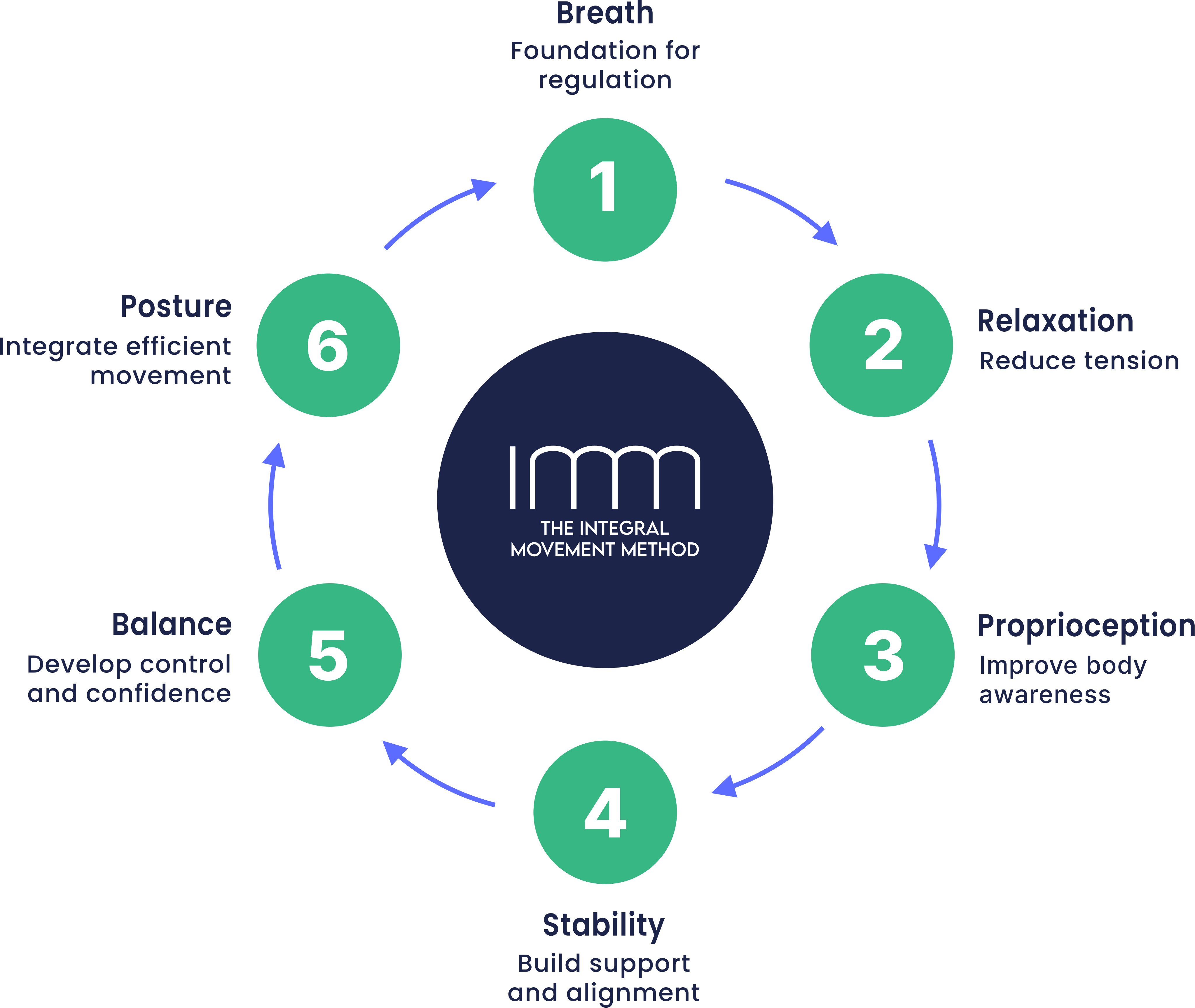
The Integral Movement Method (IMM) is a clinically-informed approach to exercise and movement for people with hEDS, HSD and related conditions. Developed by Jeannie Di Bon, it sequences breath, relaxation, proprioception, stability, balance and posture before strength, building capacity in the right order for a hypermobile body.
The problem
Why doesn't generic exercise work for hypermobile bodies?
Most people who find us have already tried gyms, Pilates studios, physical therapy and YouTube. Many were told to "strengthen the muscles around the joints" – and ended up worse than before.
This isn't because they did it wrong. Generic exercise prioritises intensity before control, strength before stability, volume before readiness. For a body whose connective tissue doesn't behave the way most bodies do, that order makes things worse. The IMM was built to do it the other way round.
Generic exercise
- Intensity before control
- Strength before stability
- Volume before readiness
The IMM
- Control before intensity
- Stability before strength
- Readiness before volume
- Built for hypermobile bodies
The method
What are the six principles of the Integral Movement Method?
The IMM is built on six principles that determine not just what you do, but the order in which you do it. For hypermobile bodies, sequence matters more than intensity. Each principle builds on the one before it.
Breath
Regulation before progression
A nervous system in alarm can't build capacity. Calm comes first. For people with hEDS and HSD, breathwork supports autonomic regulation before any movement progression begins.
Relaxation
Sequence before intensity
Order matters more than effort. The right movement at the wrong time is the wrong movement. Hypermobile bodies often hold chronic tension as compensation for joint instability — the IMM sequences movement deliberately to avoid increasing pain.
Proprioception
Awareness before repetition
Reps without awareness reinforce the patterns that got you here. Joint hypermobility affects proprioception — the sense of where you are in space — so the IMM prioritises body awareness before repetition to retrain movement patterns.
Stability
Alignment before load
Add resistance only when the joint can hold itself in place without it. In hEDS and HSD, adding load too soon is a common source of pain flares — alignment comes before resistance.
Balance
Control before strength
If a joint can't find its end range, loading it just makes it more unstable. The IMM develops neuromuscular control before progressing to strengthening exercises for hypermobility.
Posture
Function before performance
The goal isn't a perfect plank. It's getting through the day with energy left. For people with hypermobile EDS and HSD, functional capacity in daily life is the measure of progress.
Ready to experience the IMM?

Photo credit: Bart Mazurczak
About Jeannie
Built on 18 years of clinical experience with hypermobile bodies
The IMM is founded on the clinical expertise and lived experience of Jeannie Di Bon, who offers a unique perspective as both a clinician and a patient. Over 18 years, she worked one-to-one with thousands of hypermobile clients, refining the method through independent research and study of movement therapy, anatomy, neuroscience and biomechanics.
About Jeannie